
To interview an industry expert for content, start with a question your clients already worry about, find the person who answers it for them, and make the ask about what they get: a specific audience, a clear format, and a small time commitment. Ask narrow questions that produce answers they haven't given anywhere else, publish on your own domain, and deliver the promotion you promised the day it goes live. Before the interview, ask whether their employer links to coverage of its people, because that's where the backlink usually comes from.
In this post:
- Why Hosting an Interview Works Differently Than Being Interviewed
- Who Qualifies as a Trusted Expert
- Filter Out Experts Who Won't Cooperate
- Make the Ask About What They Get
- Ask Whether Their Employer Will Link Back
- Ask Questions That Produce Answers Worth Citing
- Publish, Then Deliver the Promotion You Promised
- How the WIN Podcast Turns One Interview Into Several Backlinks
- The Flip Side: Getting Your Own People Interviewed Elsewhere
- What to Do Next
- Frequently Asked Questions About Expert Interviews for MSP Content
Why Hosting an Interview Works Differently Than Being Interviewed
When someone else interviews you, you're a guest. You show up, answer questions, and share the link. The reach is real, but the control belongs to the host.
When you host the interview, you own the asset. You choose the topic, shape the questions, and publish it on your MSP's domain, so every link the content earns points back to your site.
There's a credibility transfer too. When a cyber insurance underwriter, a compliance attorney, or a CFO who lived through a ransomware incident goes on the record with you, some of their authority attaches to your MSP. Prospects reading the post conclude that you know the right people.
The SEO case is simple. An expert interview produces content nobody else has. The quotes are original and the framing is yours, which is exactly what other bloggers and journalists cite when they cover the same topic. That's how backlinks happen without cold-pitching anyone for a link.
"The MSP owners who earn the most trust aren't the ones who publish the most — they're the ones who understand that borrowed authority is still authority. Get the right person on the record, publish it on your domain, and let the credibility transfer do its work." Ian Richardson, Founder, Fox & Crow Group
Who Qualifies as a Trusted Expert
Start with the question your clients are already worried about, then work backward to the person who answers it for them.
If your clients worry about cyber liability coverage, the expert is an underwriter or a broker who specializes in technology risk. If your clients are in healthcare or finance, it might be a compliance attorney or a HIPAA privacy officer. If a client recently lived through a breach or a disaster recovery event, they may be the most credible expert of all. A peer speaking from experience often carries more weight than a credential.
The best interview subjects:
- Have direct, operational experience with the problem your clients face
- Aren't your direct competitors
- Have a professional reason to be seen as a public voice on the topic
- Work at organizations with a web presence that link to coverage of their people
That last point matters more than most MSP owners realize. An expert whose employer regularly publishes press pages, staff mentions, or in-the-news roundups is far more likely to produce a backlink than a solo practitioner who barely updates their own site.
Filter Out Experts Who Won't Cooperate
Not every qualified expert is a realistic target.
Some people are too busy. Some work at firms where compliance or legal teams prohibit public commentary. Some are competitors in disguise: vendors who serve the clients you want and will use your platform to cross-sell. And some are so well known that your MSP blog isn't on their radar.
Filter before you ask. Check whether the person has done interviews before. A LinkedIn profile with a few podcast appearances or quoted articles is a good sign. Check whether their employer has a communications or PR function, because companies with PR teams handle media requests routinely. Skip anyone who would need a lengthy legal review before you could publish, since that turns a content piece into a project.
The realistic subject is usually someone building their own professional reputation, working in a space adjacent to your clients, with something to gain from being seen as a trusted voice.
Make the Ask About What They Get
Most cold asks fail because they lead with what the interviewer needs. Lead with what the expert gets.
Keep it short and specific: "I'm publishing a post for business owners in [region or vertical] about [topic]. I'd like to feature you as the expert voice. We'll send it to our email list of [number] subscribers and share it across our social channels. It should take about twenty minutes of your time."
That tells them the audience, the format, and the time commitment. Don't promise anything you can't deliver, don't call it a "partnership opportunity," and don't let it sound like a sales call in disguise. The value is the exposure and the byline.
Ask Whether Their Employer Will Link Back
This is the question most MSP owners skip, and it decides whether you earn a backlink or just a social share.
Before the interview, ask directly: "Does your company publish in-the-news mentions or staff profiles? We'd love to send you the link so your team can reference it."
You aren't asking them to do anything new. You're making it easy for them to do something they may already do. A law firm that features its attorneys in trade press, an insurer that tracks media mentions of its underwriters, or a consulting group with a press page will often add a link without any further prompting, because it's already part of their routine.
If the answer is no, or the expert works somewhere with no external communications function, you'll still get social shares and the credibility transfer. The odds of a backlink drop sharply, though, so factor that into how you rank your target list.
Ask MSP Buyer Questions That Produce Answers Worth Citing
A good interview question is specific enough that the expert can't fall back on an answer they've given a dozen times.
"What's the single most common reason a small business cyber insurance claim gets denied?" produces a far more quotable answer than "Can you tell us about the state of cyber insurance?"
Go narrow. Ask for a specific scenario. Ask what they'd tell a 25-seat business versus a 200-seat one. The more original the answer, the more likely another journalist or blogger cites it and links to it.
Publish, Then Deliver the Promotion You Promised
Publication isn't the finish line.
The day the post goes live, send the expert a direct message with the link and a thank-you. Make sharing easy: write a short suggested caption for LinkedIn and a shorter version for X if they're active there. If they asked for a specific photo credit or bio line, confirm it's exactly right before you send.
Within the first week, share the post on every channel you told them about: your email list, your LinkedIn company page, your personal LinkedIn profile, and any MSP or business community groups where the topic fits. Tag the expert every time. The more traction the post gets in public, the more likely the expert shares it, because people share things that are already doing well and reflect well on them.
How the WIN Podcast Turns One Interview Into Several Backlinks
Ian and I host the WIN podcast, and every episode is an expert interview built to work the way this post describes. One recording produces links in three directions.
Your site links to the guest
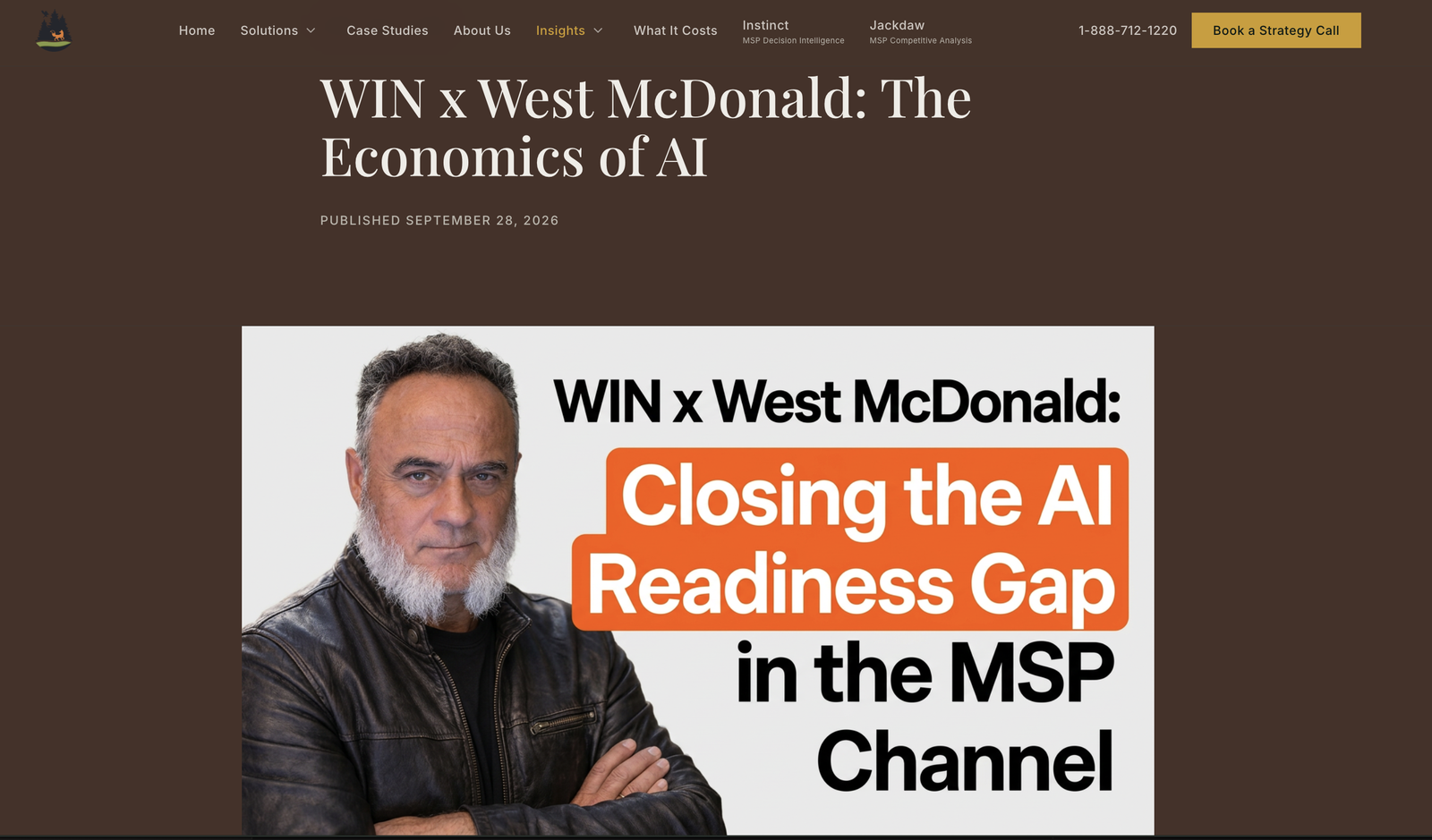
When West McDonald of Go West AI joined us to talk about the economics of AI and closing the AI readiness gap in the MSP channel, the episode got its own page on the Fox & Crow Group site, with a link back to his company. The guest gets a credible backlink and a page they're glad to share.
The guest's site links back to you
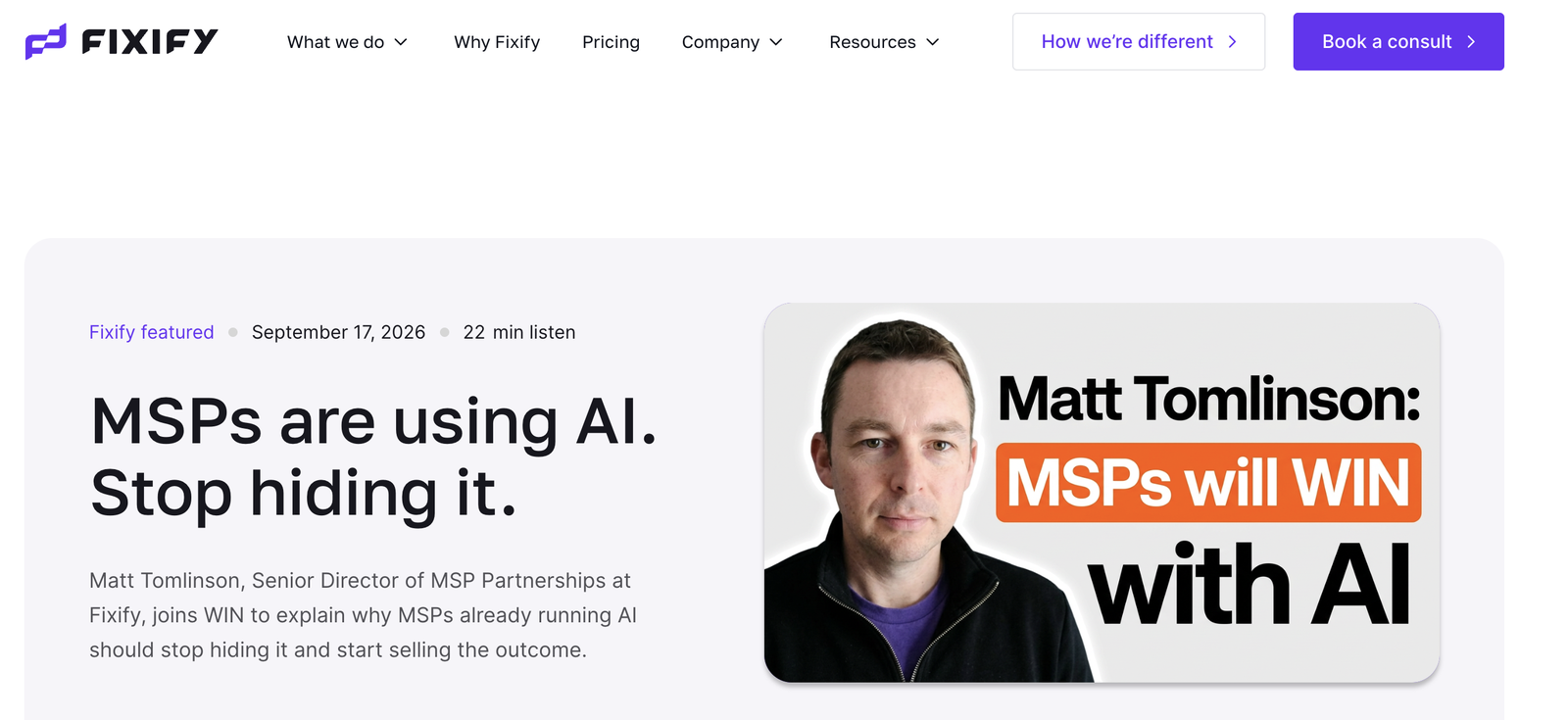
Matt Tomlinson, Senior Director of MSP Partnerships at Fixify, came on WIN to explain why MSPs already running AI should stop hiding it and start selling the outcome. Fixify published the interview on its own site and ran it as a banner on its home page. That's the employer link this post told you to ask about, and it came from a company with every reason to promote its own expert.
Podcast platforms link to both
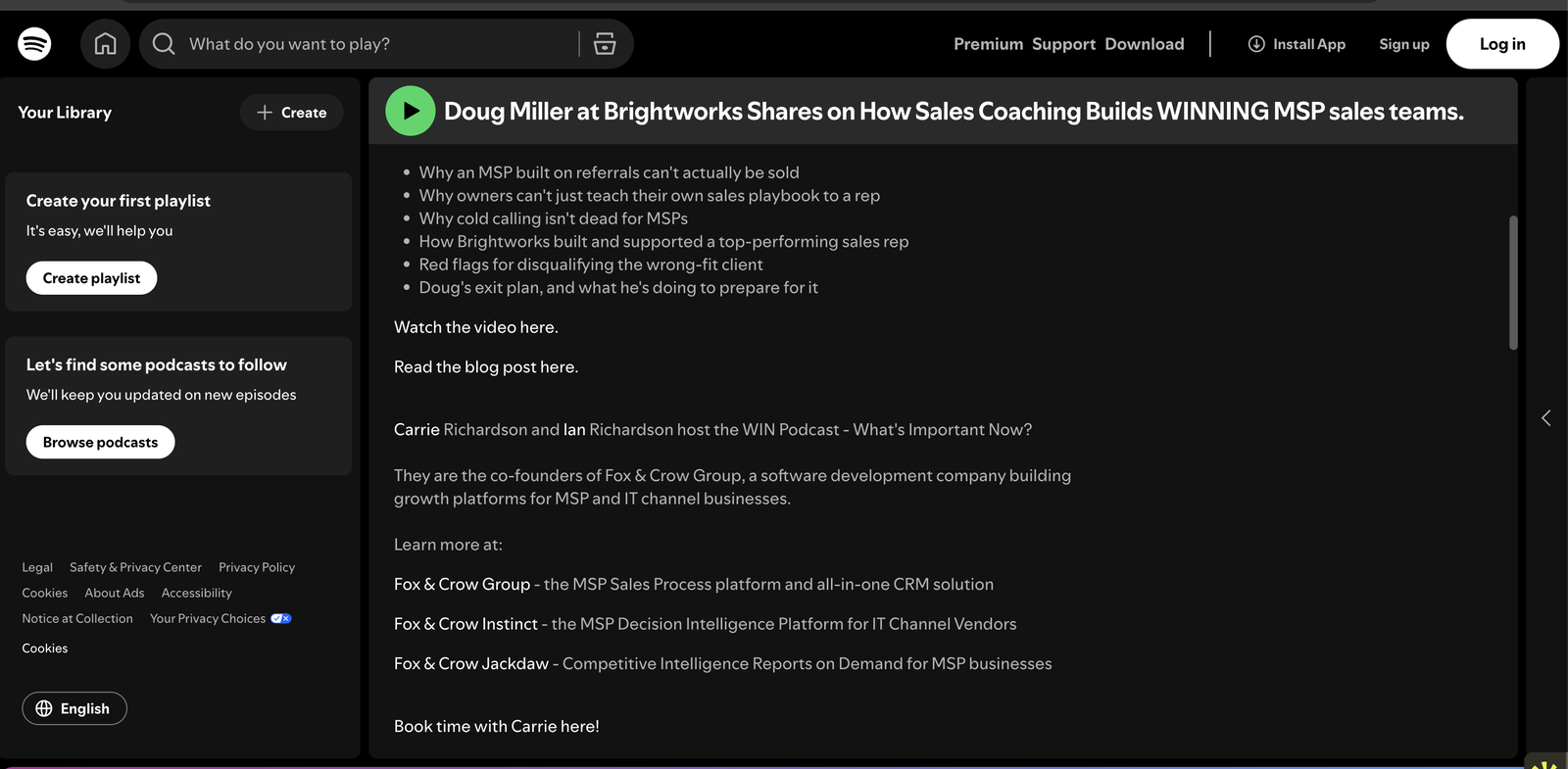
Each episode's description on the podcast platforms links back to the Fox & Crow Group site, the episode's blog post, and the guest. Our interview with Doug Miller of Brightworks on Spotify covers how sales coaching builds winning MSP sales teams, and its listing carries those links on every platform the show appears on.
That episode does a second job too. It doubles as a client testimonial, because Doug talks about how Fox & Crow Group helped Brightworks have two of the best sales years in the history of his business. A prospect hears that in the guest's own words, which carries more weight than anything we could write about ourselves.
You don't need a podcast to do this. A written interview on your blog works the same way: link to your guest, ask whether their company will post it, and share it everywhere you promised.
The Flip Side: Getting Your Own People Interviewed Elsewhere
Everything above also works in reverse.
Your MSP has expertise worth placing: your vCIO's view on technology roadmaps for small businesses, your security lead's take on what a credible risk assessment looks like, and your own perspective as an owner on the realities clients don't always want to hear.
When another site interviews one of your people and links back to your MSP, you've earned a backlink without building the content yourself. Fox & Crow Group's founder picked up exactly this kind of placement when ChannelPro Network featured Ian Richardson, an MSP trade outlet looking for a credible source on the record.
Prioritize outlets that routinely link to the experts they feature. Check their recent episodes or posts before you pitch. If those features link to the expert's bio, firm, or a recent article, the outlet is worth pursuing. If they're plain transcripts with no external links, spend your time elsewhere. The MSP PR lesson in the free marketing guide covers the outreach side in more detail.
What to Do Next
This month:
- Write down the three questions your clients worry about most.
- Next to each one, name a person outside your MSP who answers it for them: an underwriter, an attorney, an accountant, or a client who's lived it.
- Check each person's LinkedIn for past interviews and their employer's site for a press or news page.
- Send one ask, using the short format above, and include the question about whether their employer publishes media mentions.
Then pick one of your own people with a strong point of view and find two outlets in your market or vertical that interview experts and link to them.
A Jackdaw reading shows how your web presence and search visibility compare with your local MSP competitors, so you can see whether credibility like this is what's missing. Request a Reading
Frequently Asked Questions About Expert Interviews for MSP Content
How do you interview an industry expert for MSP content?
You interview an industry expert for MSP content by starting with a question your clients already worry about, finding the person who answers it for them, and asking narrow questions that produce original answers. Agree on promotion before the interview, publish on your own domain, and deliver what you promised the day it goes live.
How does an MSP find experts to interview?
An MSP finds experts to interview by starting with people it already has access to: a cyber insurance underwriter you've referred clients to, a compliance attorney who speaks at events your clients attend, or a client who lived through an incident and will go on the record. Filter out direct competitors and anyone who would need a lengthy legal review.
Do expert interviews help MSP SEO?
Expert interviews help MSP SEO in two ways. They produce original content other writers cite, and they create a realistic path to a backlink when the expert's employer links to coverage of its people. Social shares help with reach, but the link is what builds authority.
How do I get an expert to share my MSP's interview?
You get an expert to share your MSP's interview by agreeing on promotion before you record: your email list, your social channels, and the approximate reach. Then deliver it the day the post goes live, with the link, a suggested caption, and tags, so sharing takes them no effort.
How does a podcast help an MSP earn backlinks?
A podcast helps an MSP earn backlinks in three ways: the episode page on your site links to the guest, the guest's company often posts the interview on its own site with a link back, and each podcast platform listing links to both. The WIN podcast's interviews with West McDonald, Matt Tomlinson, and Doug Miller show all three.
Should an MSP let its own staff be interviewed by other outlets?
An MSP should let its own staff be interviewed by other outlets, and pursue it actively. Prioritize outlets that link to the experts they feature. A backlink from a trade blog or industry podcast covering your vertical builds authority without you having to create the content.